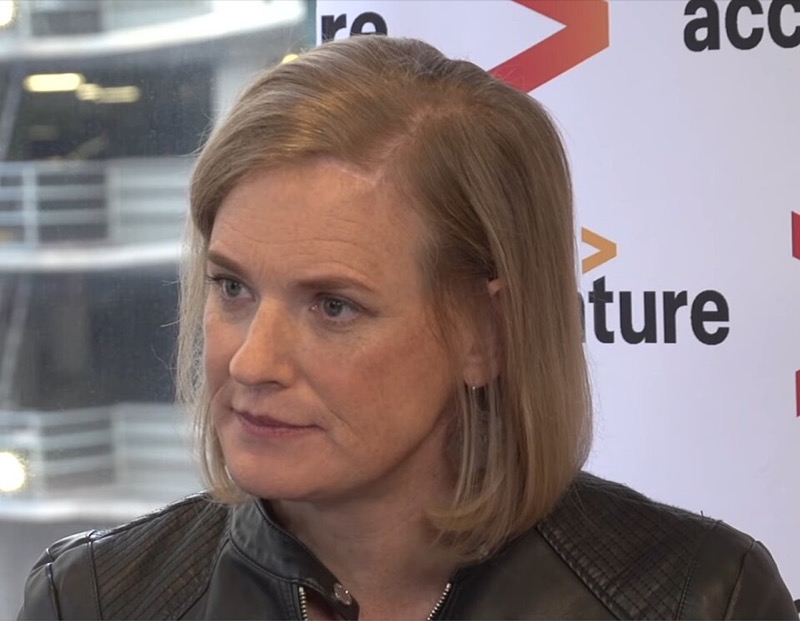
- Company
- Socos Labs
- Role
- Founder & Executive Chair
- Est. Net Worth
- $5 Million (Est.)
- Stage
- Emerging
- Industry
- Tech & SaaS
Vivienne Ming
Founder & Executive Chair at Socos Labs
About
Vivienne Ming is a theoretical neuroscientist, artificial intelligence researcher, and entrepreneur who founded Socos Labs, an independent research institute focused on using machine learning and cognitive science to solve complex human problems — from predicting and preventing diabetes using AI to developing adaptive educational technologies that personalize learning for each student. Her career spans the intersection of neuroscience and technology, including the development of AI systems for early diagnosis of mental health conditions and the creation of prosthetic intelligence devices for people with neurological disorders. Ming is also one of the most prominent transgender women in technology, and her willingness to speak openly about her transition, the discrimination she has faced, and the intersection of identity and innovation has made her an influential voice in conversations about diversity in tech. She holds a PhD in computational neuroscience from Carnegie Mellon and serves as a visiting scholar at UC Berkeley.
Current Company
Socos Labs — Founder & Executive Chair
The Neuroscientist Building Machines That Understand People
Vivienne Ming's work sits at one of the most consequential intersections in modern science: the point where artificial intelligence meets the biological complexity of the human brain. As a theoretical neuroscientist and AI researcher, she has developed systems that use machine learning to predict and prevent medical crises — including an AI-powered system that can predict diabetic episodes before they occur, giving patients and their families precious time to intervene. Her research at Socos Labs, the independent research institute she founded, applies computational models of human cognition to problems that range from education (developing adaptive learning systems that personalize instruction for individual students) to mental health (building tools for early detection of depression and anxiety) to workforce development (creating AI assessments that evaluate potential rather than credentials).
What distinguishes Ming's approach from much of the AI industry is her insistence that technology should augment human capabilities rather than replace human judgment. While many AI researchers focus on automation — building systems that can perform human tasks faster and cheaper — Ming's work focuses on augmentation: giving humans better information, better tools, and better insight into their own cognitive processes. This philosophical orientation shapes every project she undertakes, from her work on prosthetic intelligence (devices that compensate for neurological deficits) to her research on educational technology (systems designed to make teachers more effective, not to replace them).
Identity, Inclusion, and the Responsibility of Technologists
Ming's public identity as a transgender woman in technology has made her an influential voice in conversations about diversity, inclusion, and the social responsibility of the technology industry. Her willingness to speak openly about her transition — and about the discrimination, professional setbacks, and personal challenges she has faced — has provided visibility and representation for transgender people in STEM at a moment when that community faces intense political hostility and social stigma. But Ming has been careful to frame her advocacy not as a request for special treatment but as a demonstration of the broader principle that diversity of experience produces better science: her own cognitive research, she has argued, has been enriched by her experience of navigating the world in different gendered contexts.
Her critique of the technology industry's approach to AI ethics has been particularly pointed: Ming has argued that most corporate AI ethics initiatives are performative — designed to manage public relations risk rather than to genuinely address the ways that AI systems can reinforce and amplify existing social inequalities. Her alternative approach, which she calls 'inclusive AI,' focuses on building diverse perspectives into the design process from the beginning rather than auditing for bias after the fact. This means not just hiring diverse engineering teams but fundamentally rethinking who is consulted in the design process, whose needs are prioritized, and how success is measured. It is an approach that demands more of technologists than most are comfortable giving — and that is, Ming argues, exactly why it matters.