- Company
- Gulf States Health Policy Center
- Role
- Founder & Former U.S. Surgeon General
- Est. Net Worth
- $3 Million (Est.)
- Stage
- Emerging
- Industry
- Healthcare
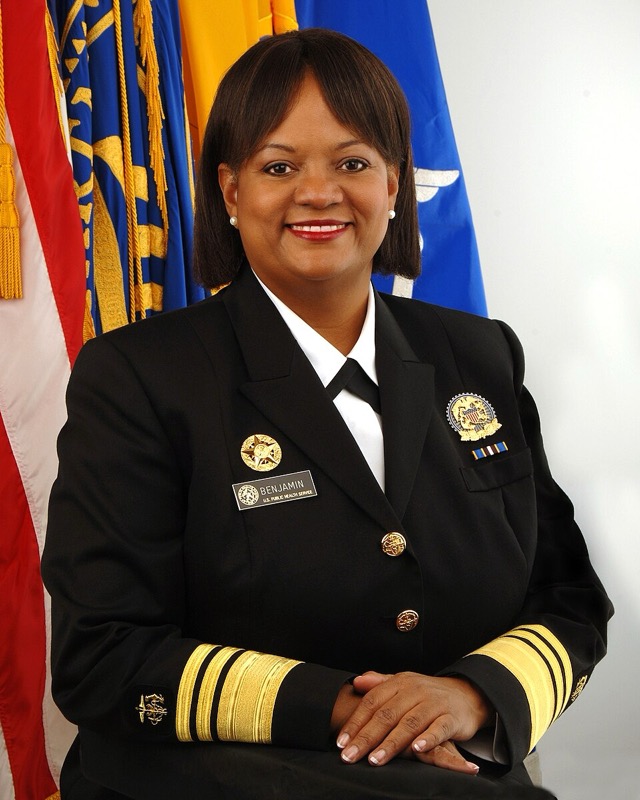
Regina Benjamin
Founder & Former U.S. Surgeon General at Gulf States Health Policy Center
About
Regina Benjamin served as the 18th Surgeon General of the United States under President Obama and is the founder of the Bayou La Batre Rural Health Clinic in Alabama and the Gulf States Health Policy Center, dedicated to improving health outcomes in underserved communities along the Gulf Coast. Benjamin built her clinic in one of the poorest regions in the country — a fishing village in coastal Alabama — and rebuilt it three times after it was destroyed by hurricanes and a fire, demonstrating a commitment to her patients that earned her a MacArthur Fellowship, a Nelson Mandela Award for Health and Human Rights, and national recognition that led to her appointment as Surgeon General. As the first African American woman and the first person under 50 to receive the AMA's Nelson Mandela Award, Benjamin became a symbol of the possibility of providing excellent healthcare in communities that the medical establishment had largely abandoned. Her post-government work through the Gulf States Health Policy Center focuses on addressing the health disparities that disproportionately affect rural and coastal communities.
Current Company
Gulf States Health Policy Center — Founder & Former U.S. Surgeon General
The Doctor Who Refused to Leave Her Patients Behind
Regina Benjamin's commitment to providing healthcare in one of America's poorest and most vulnerable communities has made her a symbol of what medicine looks like when it is practiced as a genuine calling rather than a career choice. In 1990, Benjamin opened a small clinic in Bayou La Batre, Alabama — a fishing village on the Gulf Coast with a population of about 2,500, many of whom were Vietnamese and Cambodian immigrants who worked in the seafood processing industry and had no access to healthcare. The clinic served patients regardless of their ability to pay, and Benjamin often provided care for free, supporting the clinic through grants, fundraising, and her own savings.
The clinic was destroyed three times — by Hurricane Georges in 1998, by a fire in 2006, and by Hurricane Katrina in 2005 — and each time Benjamin rebuilt it, refusing to abandon the community that depended on her. The third rebuilding, after Hurricane Katrina, was particularly dramatic: Benjamin lost her own home in the storm but continued to see patients in a borrowed space while raising funds to construct a permanent facility. Her refusal to leave Bayou La Batre, even when every rational calculation argued for relocating to a more prosperous community, earned her recognition including a MacArthur Fellowship and the Nelson Mandela Award for Health and Human Rights — and eventually caught the attention of President Obama, who nominated her as the eighteenth Surgeon General of the United States.
Surgeon General and the Fight for Rural Health Equity
As Surgeon General from 2009 to 2013, Benjamin focused on preventive health and wellness, launching the National Prevention Strategy — a comprehensive plan to shift the American healthcare system's orientation from treatment to prevention. Her personal experience in Bayou La Batre informed her policy priorities: she understood, from decades of practice, that the most effective interventions in community health are not the dramatic surgical procedures or expensive medications that dominate media coverage, but the basic public health measures — clean water, nutrition education, prenatal care, vaccination, and chronic disease management — that prevent illness from developing in the first place.
After leaving the Surgeon General's office, Benjamin founded the Gulf States Health Policy Center, a nonprofit dedicated to addressing the health disparities that disproportionately affect rural and coastal communities along the Gulf of Mexico. The center's work focuses on the social determinants of health — the environmental, economic, and social factors that shape health outcomes more powerfully than medical care alone — and on building the capacity of local communities to advocate for their own health needs. Benjamin's career, from the clinic in Bayou La Batre to the Surgeon General's office and back to community-focused work in the Gulf States, describes an arc that is rare in American medicine: a career driven not by prestige, income, or institutional advancement, but by an unwavering commitment to serving the patients and communities that the healthcare system has failed.