- Company
- Infosys
- Role
- Co-Founder
- Est. Net Worth
- $4.5 Billion (Est.)
- Stage
- Elite
- Industry
- Tech & SaaS
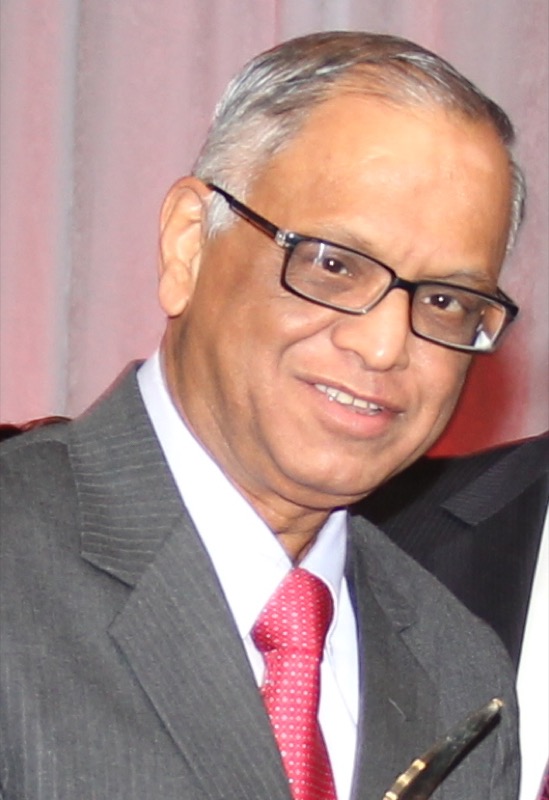
N.R. Narayana Murthy
Co-Founder at Infosys
About
N.R. Narayana Murthy co-founded Infosys in 1981 with six colleagues and $250 in borrowed capital, building it into one of the world's largest IT services companies with over 300,000 employees and annual revenues exceeding $18 billion. Murthy's vision of delivering high-quality software services from India to global corporations helped pioneer the offshore IT services model that transformed India's economy and created millions of middle-class jobs. Known for his emphasis on corporate governance, transparency, and ethical business practices, Murthy established Infosys as a model of how Indian companies could compete on the global stage not just on cost but on quality and integrity. His insistence on listing Infosys on NASDAQ — the first Indian company to do so — reflected his belief that Indian technology companies should be held to the highest global standards of transparency and accountability.
Current Company
Infosys — Co-Founder
The $250 Bet That Built India's IT Industry
N.R. Narayana Murthy's founding of Infosys with six colleagues and $250 borrowed from his wife is one of the creation myths of modern India — a story that captures both the audacity and the modesty of the country's technology revolution. When Murthy and his co-founders launched Infosys in Pune in 1981, the idea that an Indian company could provide software services to the world's largest corporations seemed quixotic at best. India's telecommunications infrastructure was primitive, its bureaucracy legendarily obstructive, and the very concept of a knowledge-based services industry was largely alien to a country still dominated by agriculture and heavy manufacturing. But Murthy saw what others did not: that India's English-speaking, mathematically gifted workforce represented an enormous latent competitive advantage, and that the emerging field of software development could be organized as a service industry that delivered value across oceans.
The company Murthy built was distinctive not just for its commercial success but for the culture he instilled. At a time when Indian business was often characterized by opaque governance, family nepotism, and creative accounting, Murthy insisted on radical transparency — publishing detailed financial statements, rotating leadership among the co-founders, and establishing governance standards that exceeded those of many Western corporations. His decision to list Infosys on NASDAQ was more than a capital markets strategy; it was a statement that Indian companies could and should be held to the highest global standards. The result was a company that didn't just generate wealth for its founders and shareholders but that established the credibility of the entire Indian IT industry, opening doors for hundreds of companies that followed.
Compassionate Capitalism and the Infosys Model
Murthy's concept of 'compassionate capitalism' — the idea that business success carries an obligation to share prosperity with employees, communities, and society at large — has shaped how an entire generation of Indian entrepreneurs thinks about the relationship between profit and purpose. At Infosys, this philosophy manifested in practices that were revolutionary for an Indian company: broad-based stock ownership that created thousands of millionaires among the company's employees, investment in world-class campuses and facilities that gave Indian workers amenities comparable to those at Silicon Valley companies, and a systematic commitment to hiring and developing talent from every region and background in India rather than concentrating opportunity among the privileged urban elite.
Murthy's influence on Indian business culture extends beyond Infosys to the broader ecosystem of technology companies, startups, and business schools that his example inspired. The Infosys Foundation, led for decades by his wife Sudha Murthy, has invested in education, healthcare, and rural development across India, and Murthy himself has been a tireless advocate for educational reform, arguing that India's economic future depends on developing its human capital through better schools, universities, and vocational training programs. Now in his late seventies, Murthy has returned to public life as an elder statesman of Indian business, speaking candidly about the challenges facing the Indian economy and the technology industry — including the need for Indian companies to move beyond services into product development and innovation.