- Company
- Algorithmic Justice League
- Role
- Founder
- Est. Net Worth
- $3 Million (Est.)
- Stage
- Emerging
- Industry
- Tech & SaaS
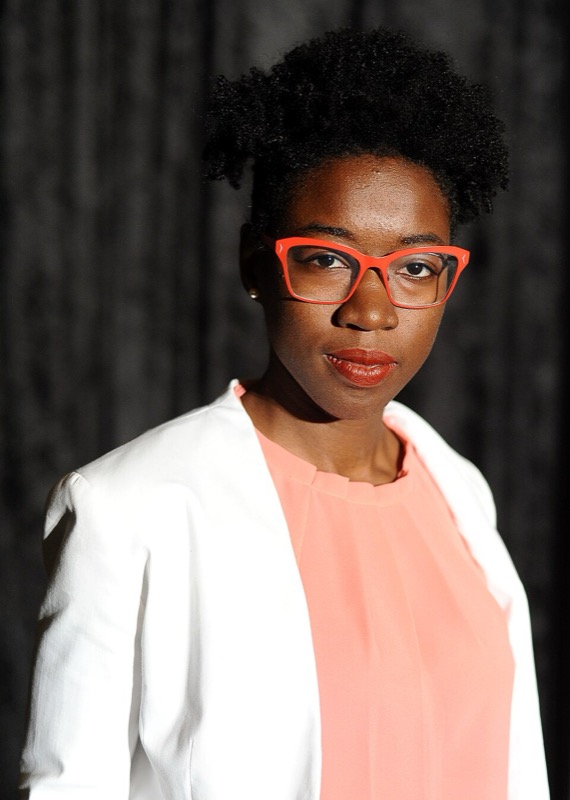
Joy Buolamwini
Founder at Algorithmic Justice League
About
Joy Buolamwini is a computer scientist, digital activist, and founder of the Algorithmic Justice League, an organization that combines research and advocacy to fight the harms of artificial intelligence bias. As a graduate researcher at the MIT Media Lab, Buolamwini discovered that commercial facial recognition systems from major technology companies — including IBM, Microsoft, and Amazon — had dramatically higher error rates when identifying women and people with darker skin, a finding she documented in her groundbreaking 'Gender Shades' research. The study, which showed error rates as high as 34.7 percent for darker-skinned women compared to less than 1 percent for lighter-skinned men, provided the empirical evidence that transformed the conversation about AI bias from theoretical concern to documented reality. Her work has led directly to policy changes, including moratoriums on government use of facial recognition technology in several U.S. cities and federal legislation addressing algorithmic discrimination.
Current Company
Algorithmic Justice League — Founder
Unmasking the Bias in the Machines
Joy Buolamwini's discovery that commercial facial recognition systems systematically failed to recognize faces of women and people with darker skin was one of the most consequential findings in the history of artificial intelligence — not because the technology's limitations were surprising to those who built it, but because Buolamwini provided the rigorous, empirical evidence that transformed vague concerns about AI bias into documented fact. Her 'Gender Shades' study, published in 2018, tested facial recognition systems from IBM, Microsoft, and Megvii (Face++) and found error rates that varied dramatically by gender and skin tone: lighter-skinned males were identified with near-perfect accuracy, while darker-skinned females were misidentified up to 34.7 percent of the time. The disparity was not subtle — it was a chasm, and it had direct implications for anyone subjected to automated surveillance, identity verification, or law enforcement screening.
The study's impact was amplified by Buolamwini's ability to communicate its findings beyond academic audiences. Her 2020 documentary 'Coded Bias' brought the issue to a global audience, and her spoken-word poetry about algorithmic discrimination — including the poem 'AI, Ain't I a Woman?' — used art to make the human stakes of technical bias visceral and personal. Buolamwini's work led directly to concrete policy changes: IBM withdrew its facial recognition product from the market, Amazon imposed a moratorium on police use of its Rekognition system, and several U.S. cities banned government use of facial recognition technology entirely.
The Algorithmic Justice League and the Fight for Accountable AI
Buolamwini founded the Algorithmic Justice League in 2016 to move the conversation about AI bias from documentation to action — building an organization that combines technical research, public advocacy, and policy engagement to ensure that the artificial intelligence systems increasingly governing people's lives are subject to meaningful accountability. The AJL's work goes beyond facial recognition to address the full spectrum of algorithmic harms: hiring algorithms that discriminate against women and minorities, predictive policing systems that perpetuate racial profiling, healthcare algorithms that systematically underestimate the severity of Black patients' conditions, and content moderation systems that disproportionately silence marginalized voices.
What distinguishes Buolamwini's approach from many technology critics is her insistence that the problem is not artificial intelligence itself but the lack of diversity, accountability, and democratic oversight in how AI systems are designed and deployed. She has argued that the same technologies that produce discriminatory outcomes when built by homogeneous teams and deployed without safeguards could, in principle, be designed to advance equity and justice — but only if the people affected by these systems have a genuine voice in their development and governance. Her advocacy has influenced federal legislation, corporate AI ethics policies, and the growing movement for algorithmic accountability. Buolamwini represents a new kind of technologist: one who uses technical expertise not to build products but to hold the builders accountable.